
In 1983, a block of Chenin Blanc was planted.
The team tending those young vines were probably thinking about the next harvest, maybe the one after. They couldn’t have known these vines would still be rooted here some four decades later – and producing some of the best Chenin in the world.
Our new film, The Long Game, narrated by our Cellar Master Johan Jordaan, is the story of these old vines and how they continue to teach us something new with each vintage.
A Proper Labour of Love
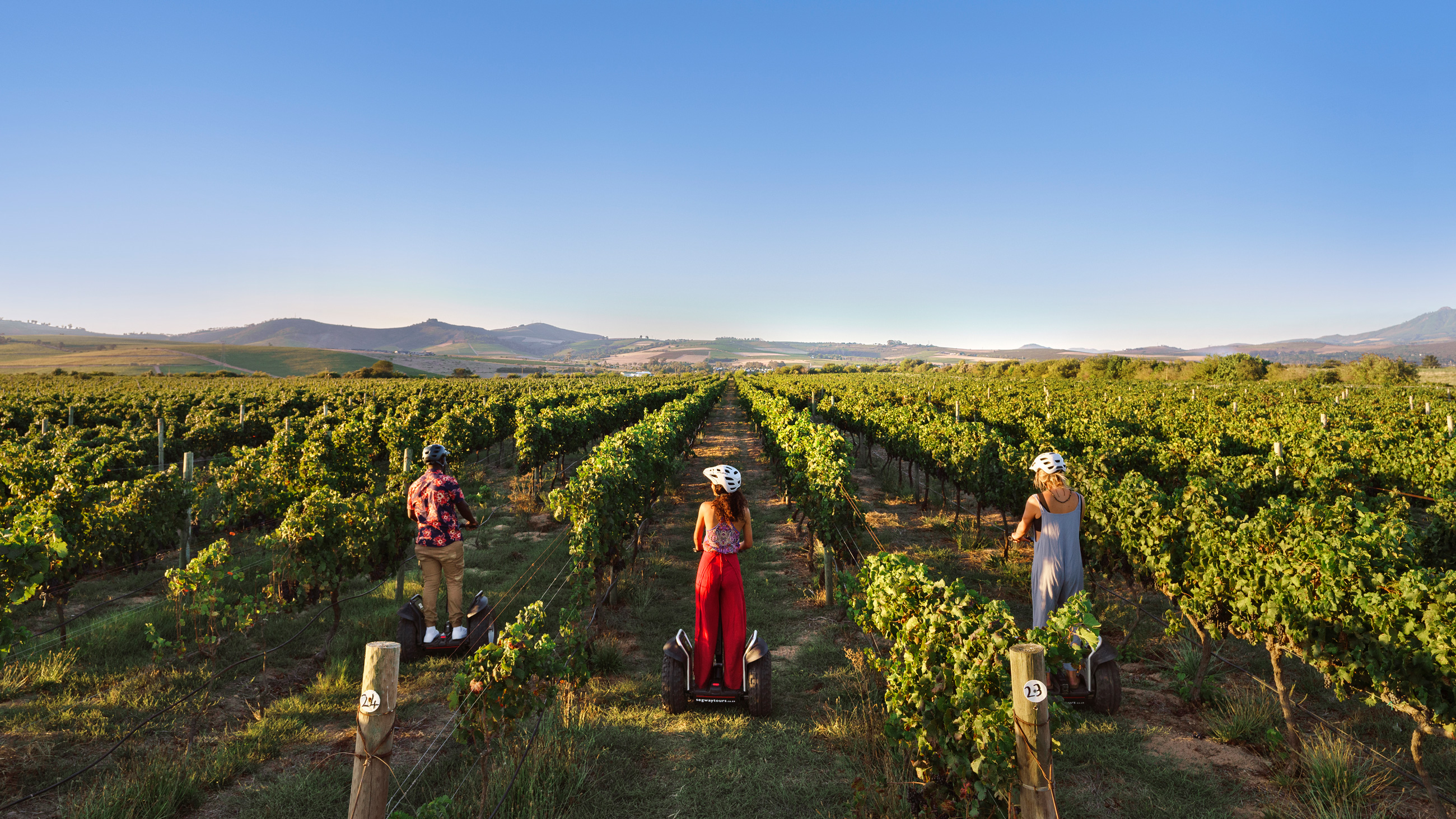
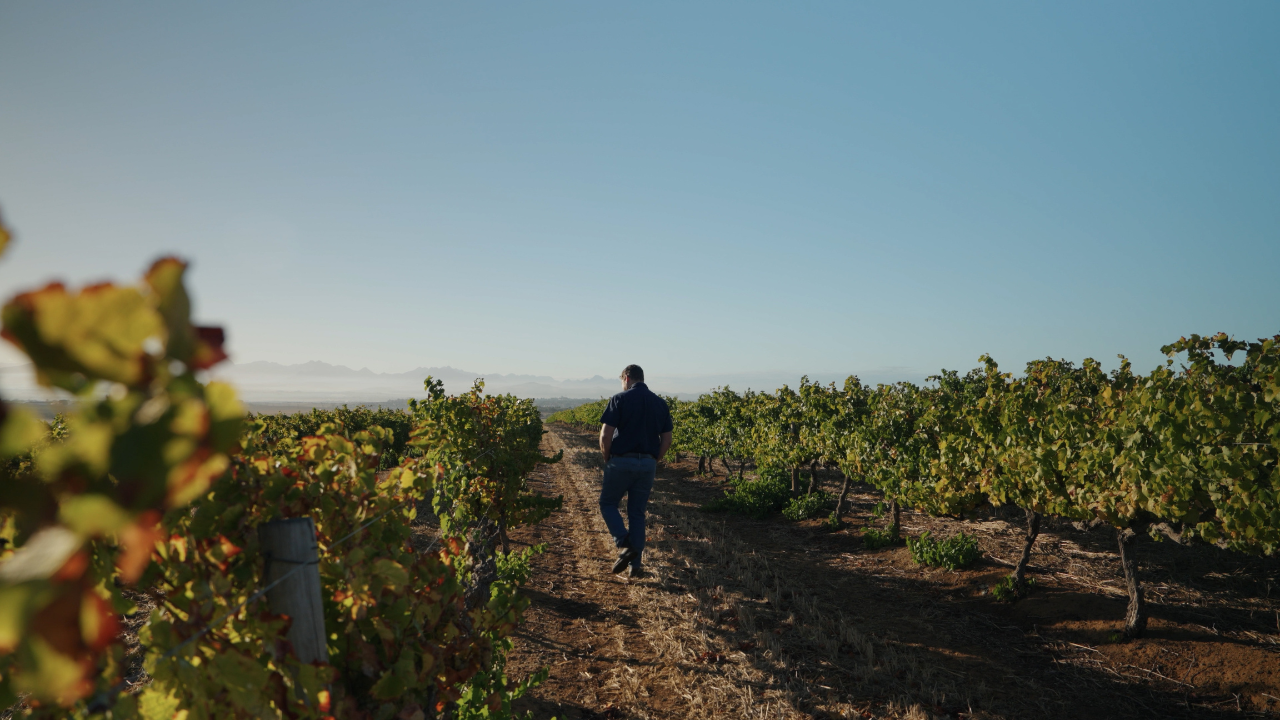
Johan walks through the vineyard rows, kneeling beside a particularly thick, gnarled trunk, branches trained over decades, a modest crop hanging heavy and almost ready to pick.
“If you’ve done your planning well, this is what an old vine can look like 43 years down the line,” he shares. It sounds romantic – and it is. But keeping a vineyard alive this long is anything but. It’s science. It’s biology. It’s hard, year-round work: pruning, watching, waiting, protecting.
So why bother?
Why Old Vines Matter
Because old vines give you something younger ones can’t. In South Africa, a vine has to reach at least 35 years to earn official “old vine” status – and only a fraction ever make it that far. The ones that survive the droughts, the winds and the changing seasons reward you with smaller crops but far deeper character: wines of real concentration, balance and identity. Pull one of these vineyards out, and you don’t just lose the fruit. You lose decades you can never get back.
The Work of Time
A vineyard this old is never the work of one person.
“If you really think about teamwork,” Johan reflects, “it’s not just humans, but also the work of time.”
He’s the first to admit it took him years to understand that. “As a young winemaker, you want to put your stamp on a wine – to decide exactly how it’s going to taste.” But the wine, he learned, has its own ideas. Push too hard, and four or five years later, you open the bottle to find it isn’t what you intended at all. “If you just let the wine do the work and guide you, that’s where the growth happens – in both the wine and yourself.”
Still Playing the Long Game
The Chenin from this 1983 block becomes our 21 Gables Chenin Blanc – a wine with Certified Heritage Vineyard status, recognised by the Global Chenin Masters as one of the best in the world. It tastes, unmistakably, of where it comes from. As Johan says, Chenin is a grape that shows you exactly where it grows.
Fruit from our old organic vines also goes into the Farmer Angus Chenin Blanc, made with regenerative farmer Angus McIntosh – grown without synthetic inputs, on a farm run as one living system. From grape to glass takes around three years. Many of these wines will keep for decades more.
A Glass for Chenin Blanc Day
For Johan, it all comes back to the moment someone takes a sip. “You smell, you recognise, and then you get this feeling of bliss,” he says. With International Chenin Blanc Day on 13 June, it’s a fitting moment to pour a glass and consider everything that went into it.
Our old vine story started in 1983. It’s a long game – and we’re still playing.