

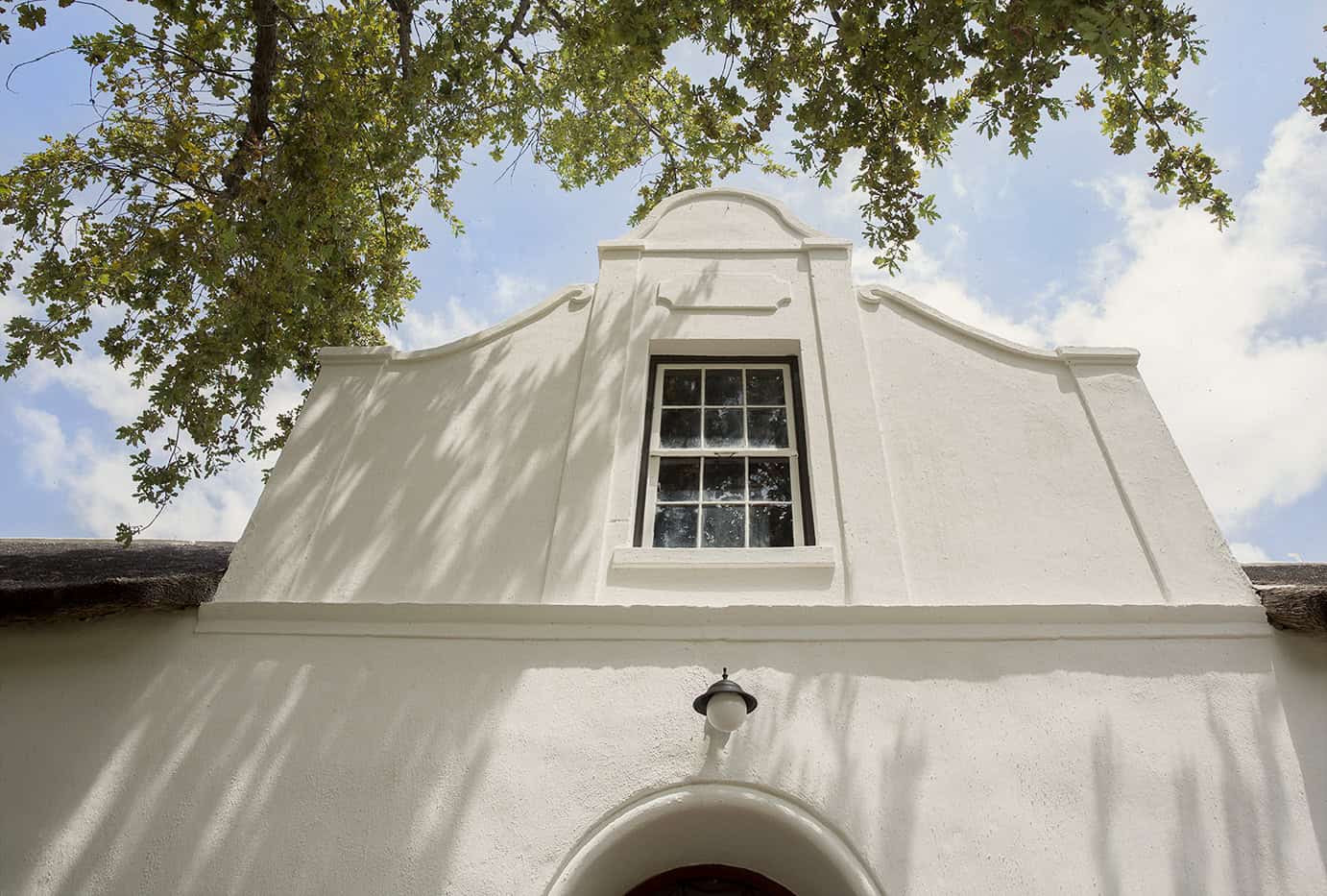
We have 21 Cape Dutch dated gables, more than any other farm in South Africa, and wandering between them is, in the words of architectural historian Hans Fransen, a lesson in architectural history. But the bigger story begins long before the gables, and long before wine was made here.
Before Spier was a farm
Long before the first vines were planted, this land was inhabited by the San hunter-gatherers and the Cochoqua people of the Khoikhoi nations, who grazed their livestock along the Eerste River.
1692, and a farm takes shape
In 1692, Governor Simon van der Stel granted the first title deed to Arnoud Jansz, a soldier in the service of the Dutch East India Company and one of Stellenbosch’s earliest wine farmers. Jansz planted the first vines, and by the mid-1700s Spier was among the region’s most significant wine producers. That long history is still written into the Werf, the heart of our farm, with its lawns and 300-year-old oaks, framed by some of its oldest buildings.
First, what is a gable?
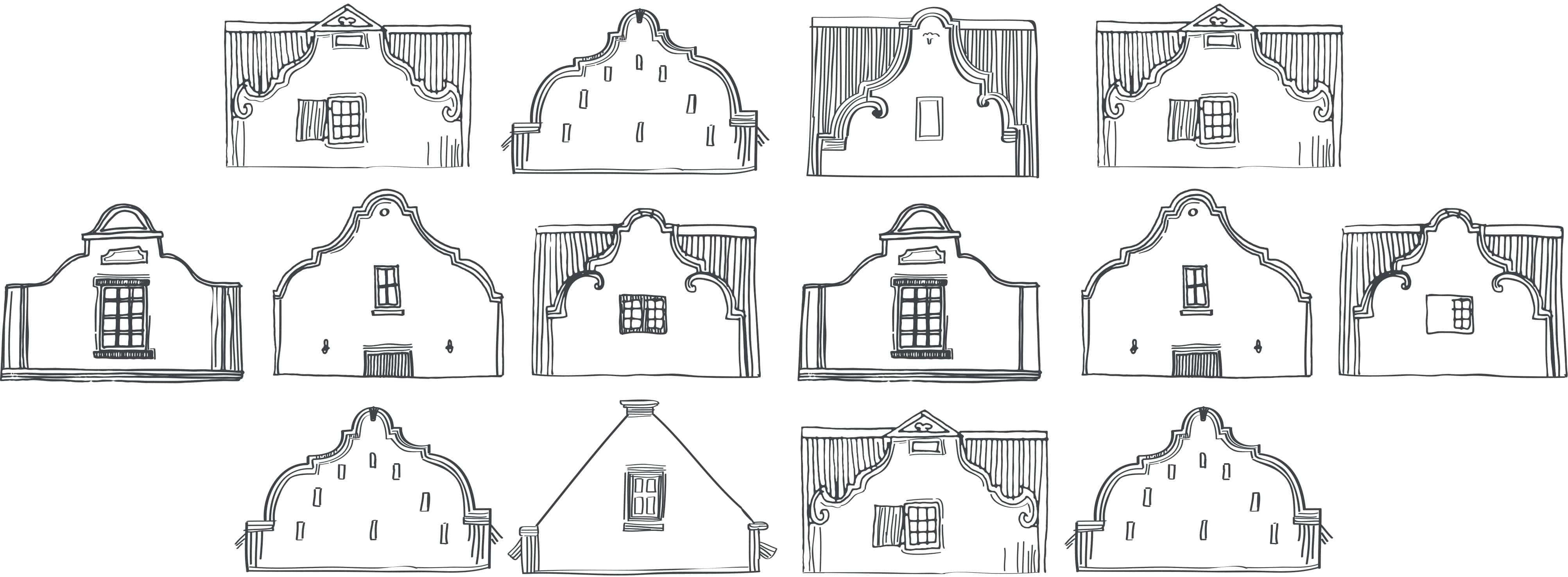
If you have ever wondered, you are not alone. A Cape Dutch gable is the ornamental parapet, curved or stepped, that rises above the entrance or end wall of a homestead, the signature flourish of the whitewashed, thatch-roofed style that took shape while the Cape was under Dutch rule. It was never only decoration. The gable framed and sheltered the opening to the loft, where the harvest was stored, and its raised wall helped protect the thatch below and slow the spread of fire between buildings. But it was also a statement: carved with the date of building, moulded with flourishes, no two quite alike, a mark of a farm’s standing and the skill of its makers. A modern building has little need for a gable, which is part of what makes a walk past the examples on our farm such a vivid measure of how differently things were done three centuries ago.
The gables, and the hands that shaped them
Few farms offer as rich a record of the style’s development as ours. The 21 gables span roughly half a century, so a walk from one to the next reveals its evolution. The oldest is a Holbol gable, distinguished by alternating inward and outward curves. Dating to 1767, it forms part of the wine cellar behind the Manor House, the oldest dated wine cellar in South Africa. The Manor House itself, built in 1822 and now a National Monument, carries another.
These gables were hand-carved and moulded by enslaved people and craftspeople from the East, many of whom were highly skilled artisans. Their craftsmanship accounts for the gables’ remarkable detail, and no honest account of our heritage is complete without acknowledging their contribution.
Heritage in the glass
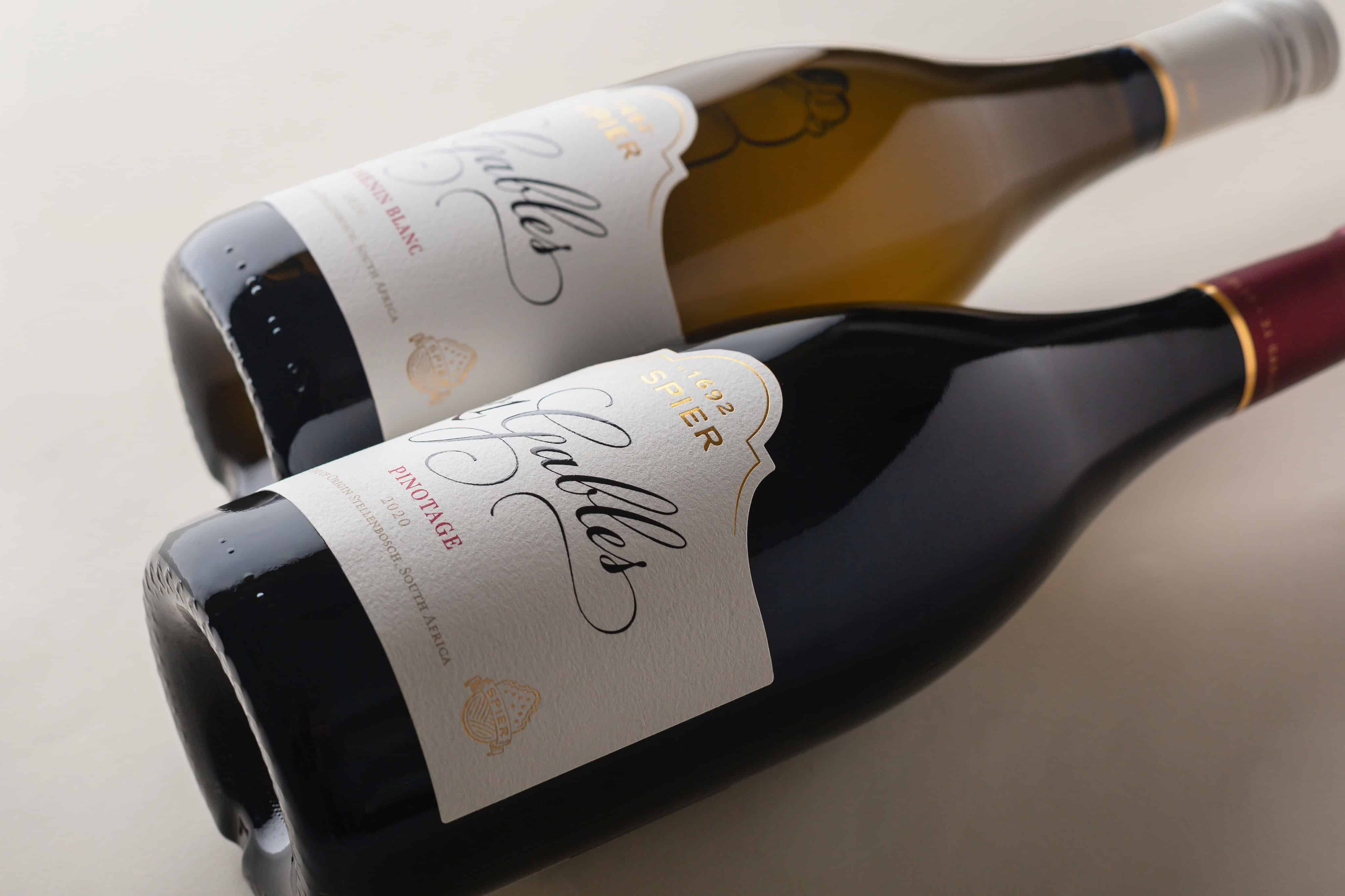
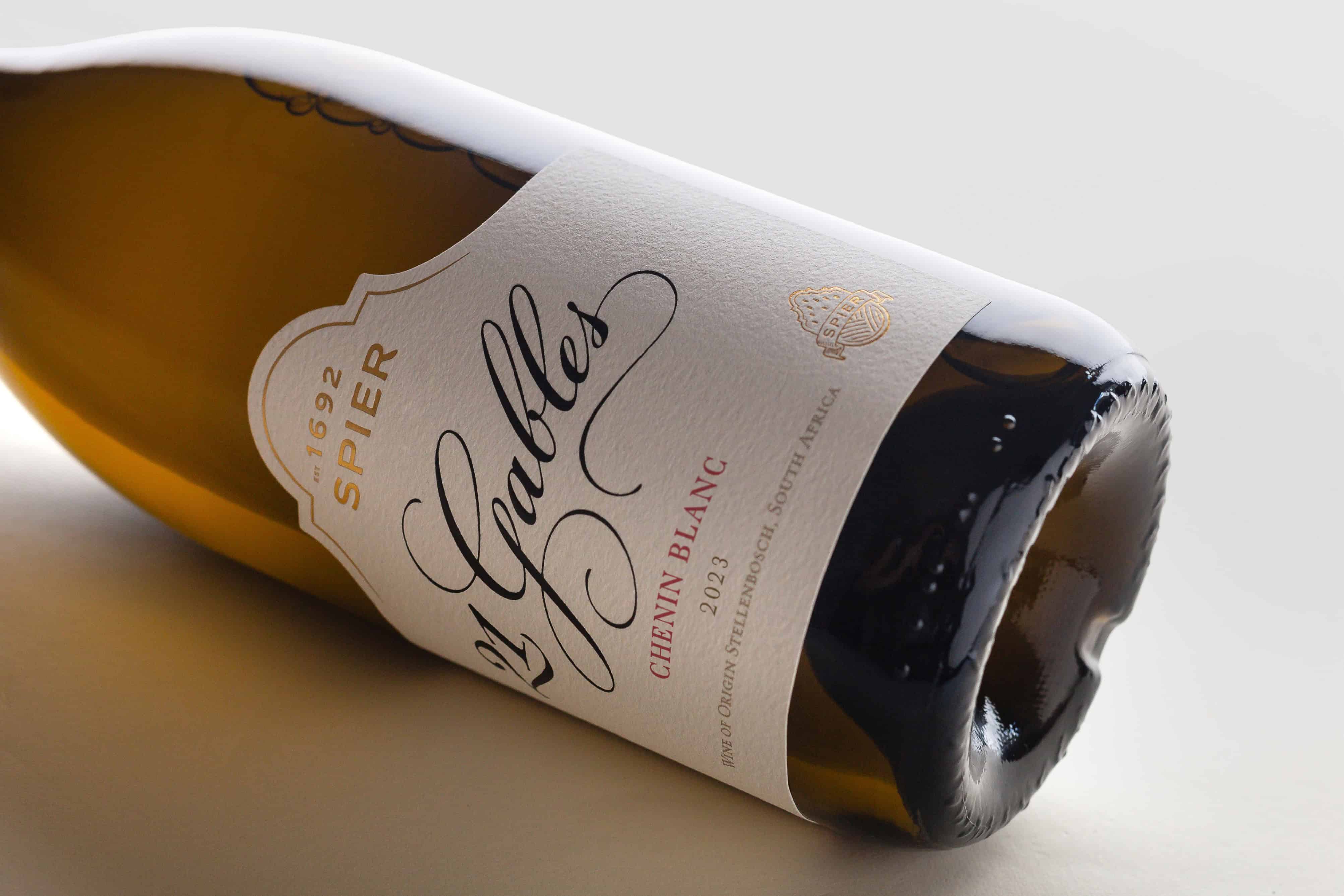
South African heritage runs through our wines, too. Two varieties carry that story in particular: Chenin Blanc, likely the first vine planted here and long known in South Africa as Steen, and Pinotage, a uniquely South African grape created in Stellenbosch in 1925. Spier’s winemaking team works with both, and the 21 Gables takes its name from the gables themselves. Its Chenin Blanc has earned cellar master Johan Jordaan the title of Master Chenin Blanc Winemaker two years running.
Honouring every chapter
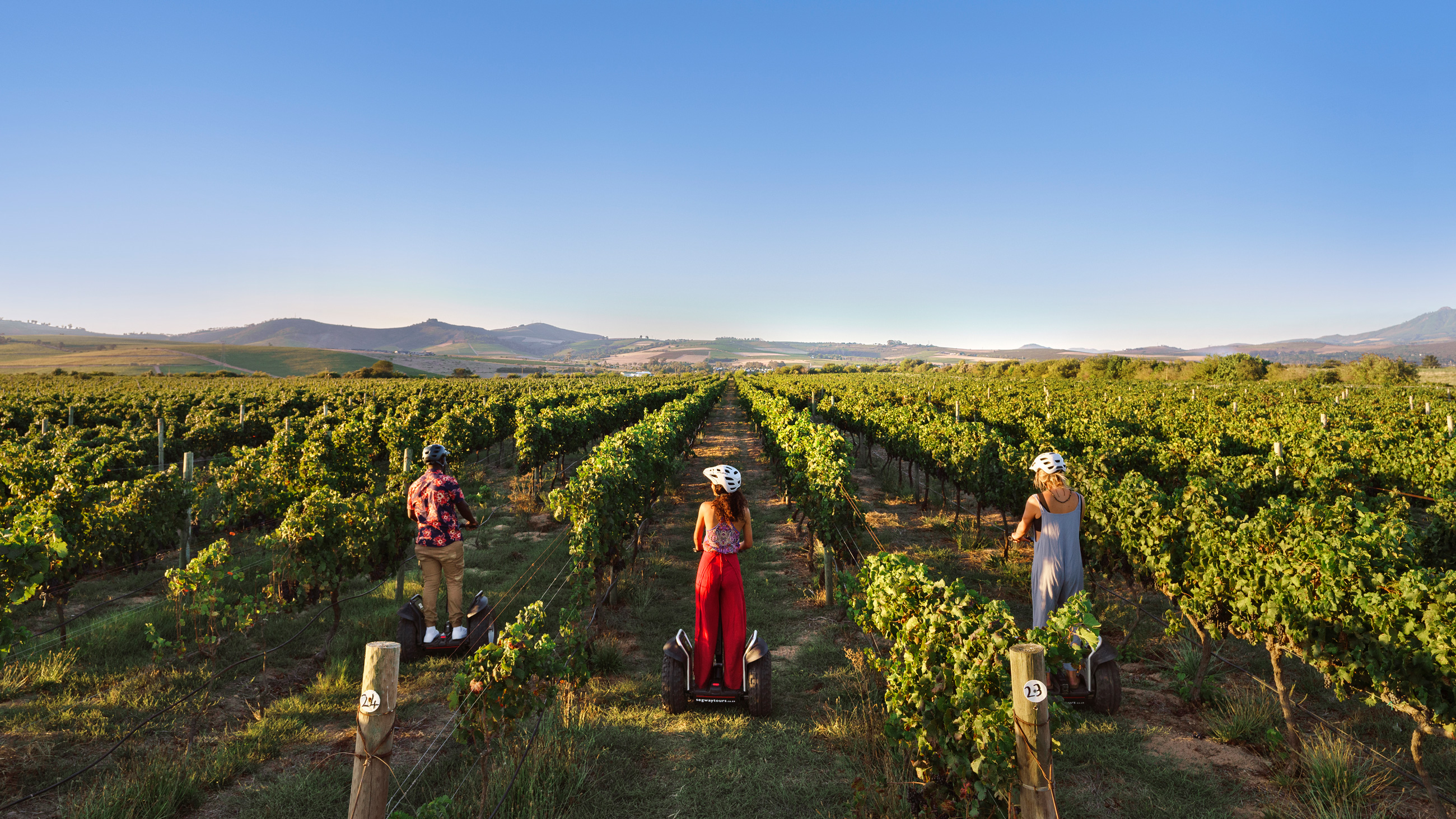
Over the centuries, Spier has had 12 owners. Since 1993, it has been in the care of the Enthoven family, who have guided the farm with a clear intention: to honour its past while building a more inclusive future. That commitment means acknowledging every chapter, from Spier’s role as a founding member of the Stellenbosch Wine Route in 1971 to the painful legacy of slavery in early Cape wine farming. This history is carried forward through ethical farming, community initiatives and the arts.
Spend Heritage Month with us
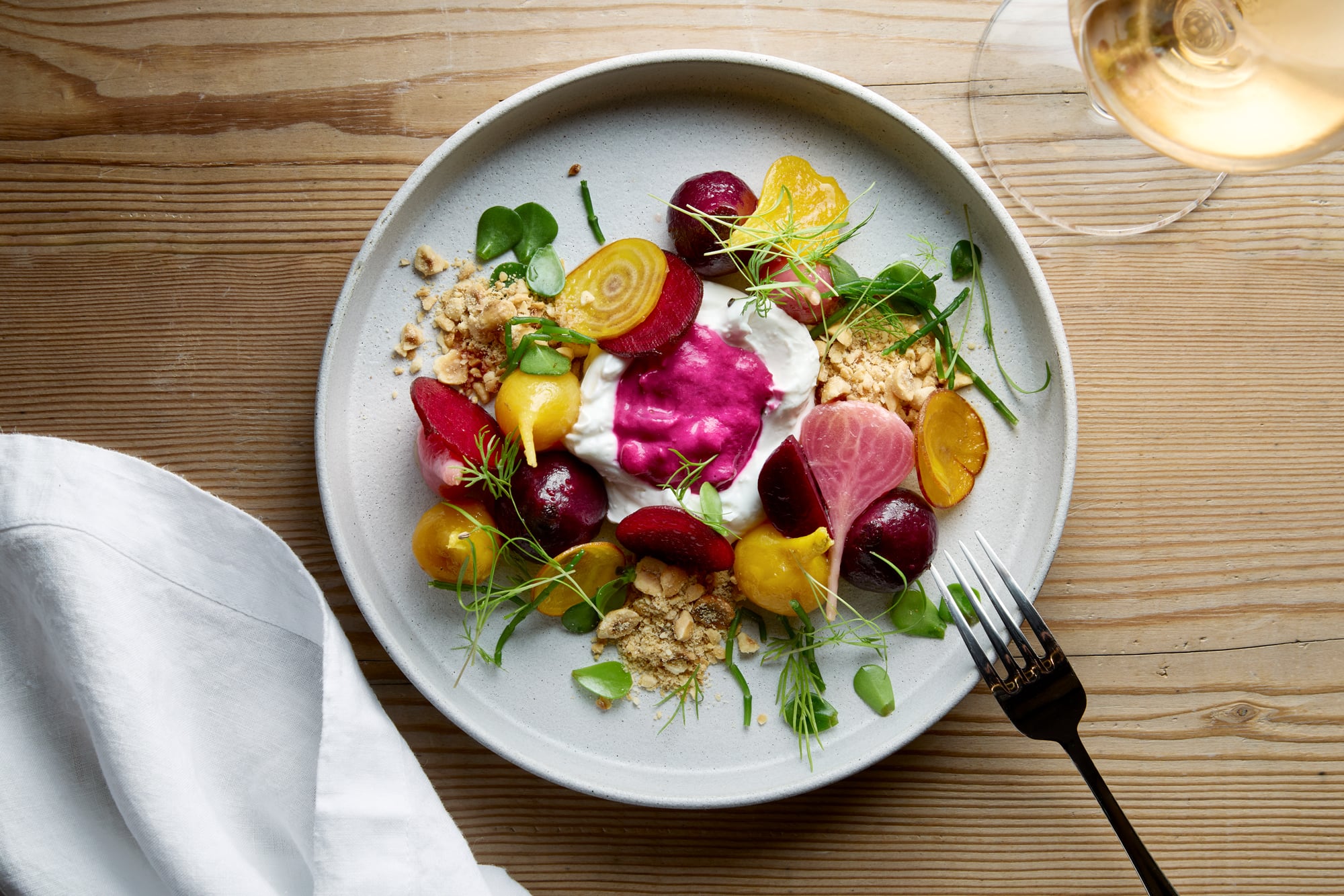
The best way to appreciate Spier’s heritage is to come and see it for yourself. Today, as you wander around our farm, you’ll find the old alongside the new. Browse the Cowshed – a shop, housed in the original cow shed – for homeware, skincare, and accessories designed by South African artisans. Book a sensorial tasting for six in the Manor House, with the 1767 cellar just behind it. Have lunch at Vadas Smokehouse & Bakery in the Old Jonkershuis, built in 1778. Or gather farm-made ingredients at the Picnickery and settle on the Werf beneath the 300-year-old oaks, a glass of 21 Gables Chenin Blanc or Pinotage in hand.
Heritage at Spier isn’t preserved in amber; it’s alive and evolving. However you spend your time on our farm, more than three centuries of South African history surround you, alongside the food, wine, art and farm life shaping Spier today
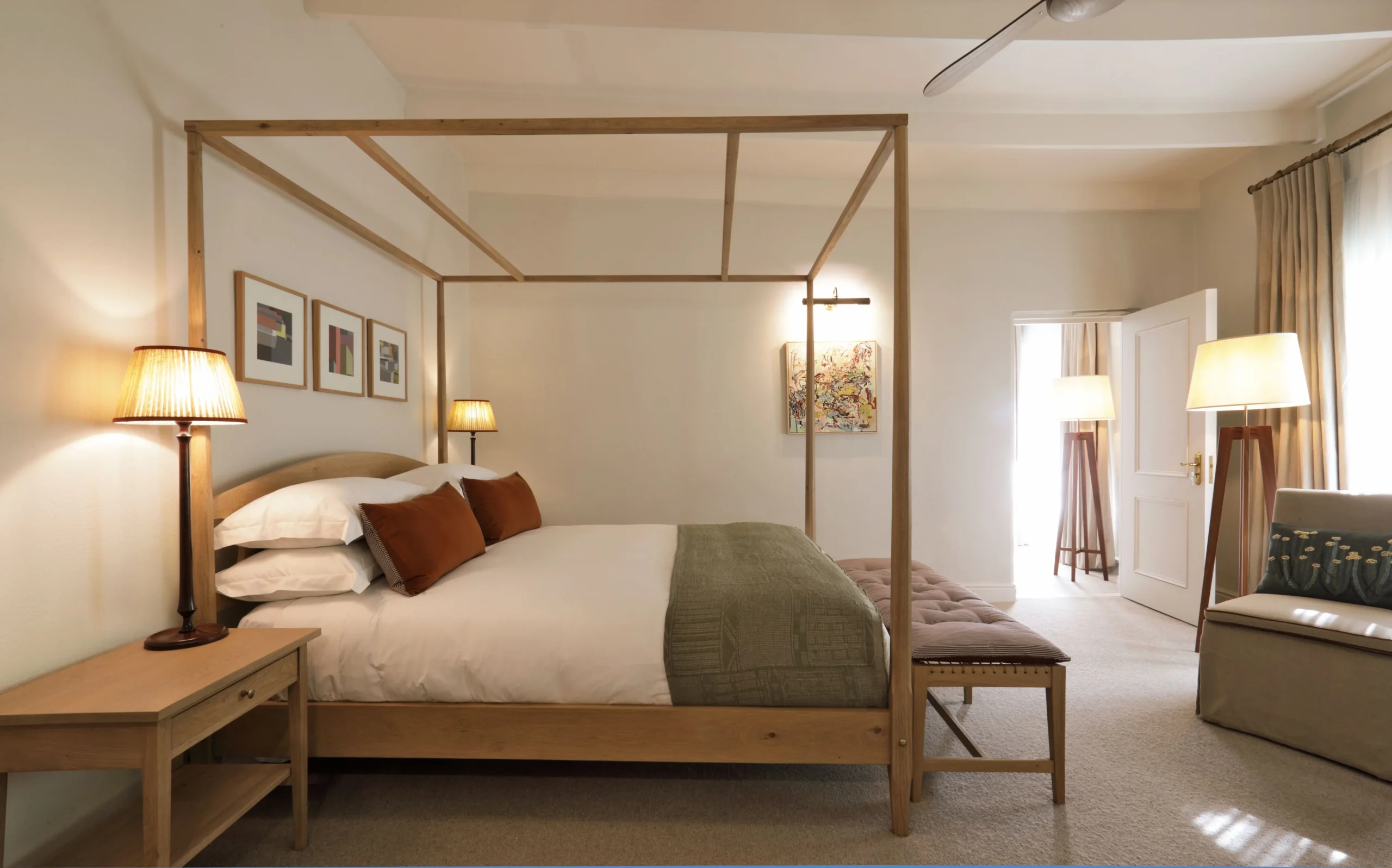
Contact reservations@spier.co.za to book your stay.